MULTISPECIES
COEXISTENCE
PRACTICE
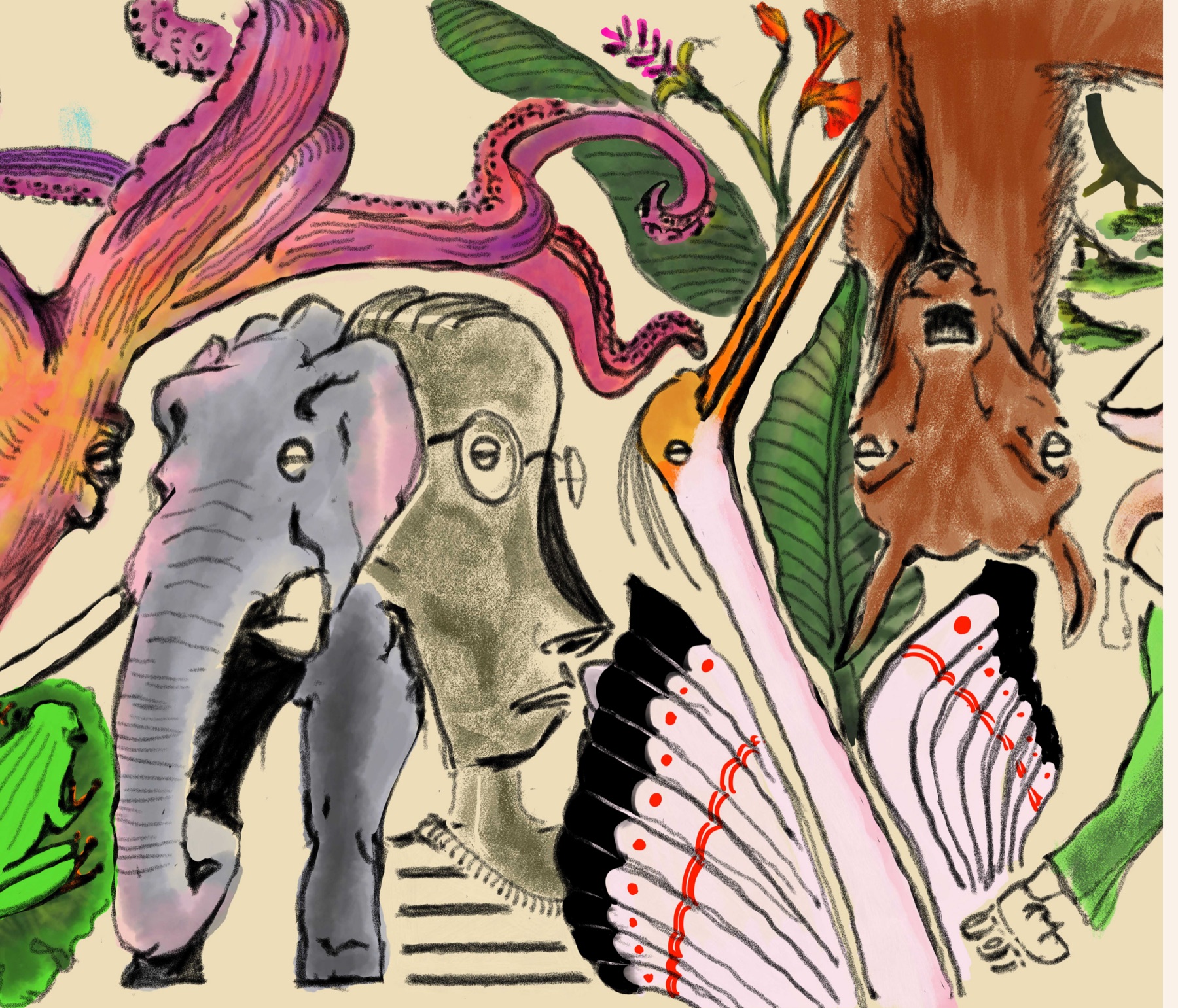
A Socratus practice on what it means to share planetary systems — with elephants, crocodiles, dogs, leopards and everything else we've stopped noticing.
A Socratus practice on what it means to share planetary systems — with elephants, crocodiles, dogs, leopards and everything else we've stopped noticing.
We live in a planetary age. This is most obviously true of climate change and ecological catastrophe, but is equally true of many other material flows in the Anthropocene.
The ongoing ecological crisis reveals the catastrophic consequences of continuing to operate under the illusion that human society exists separate from, and superior to, the planet's interconnected systems.
The challenge, therefore, lies in transcending our human-centred perspective while simultaneously acknowledging our entanglement within planetary systems.
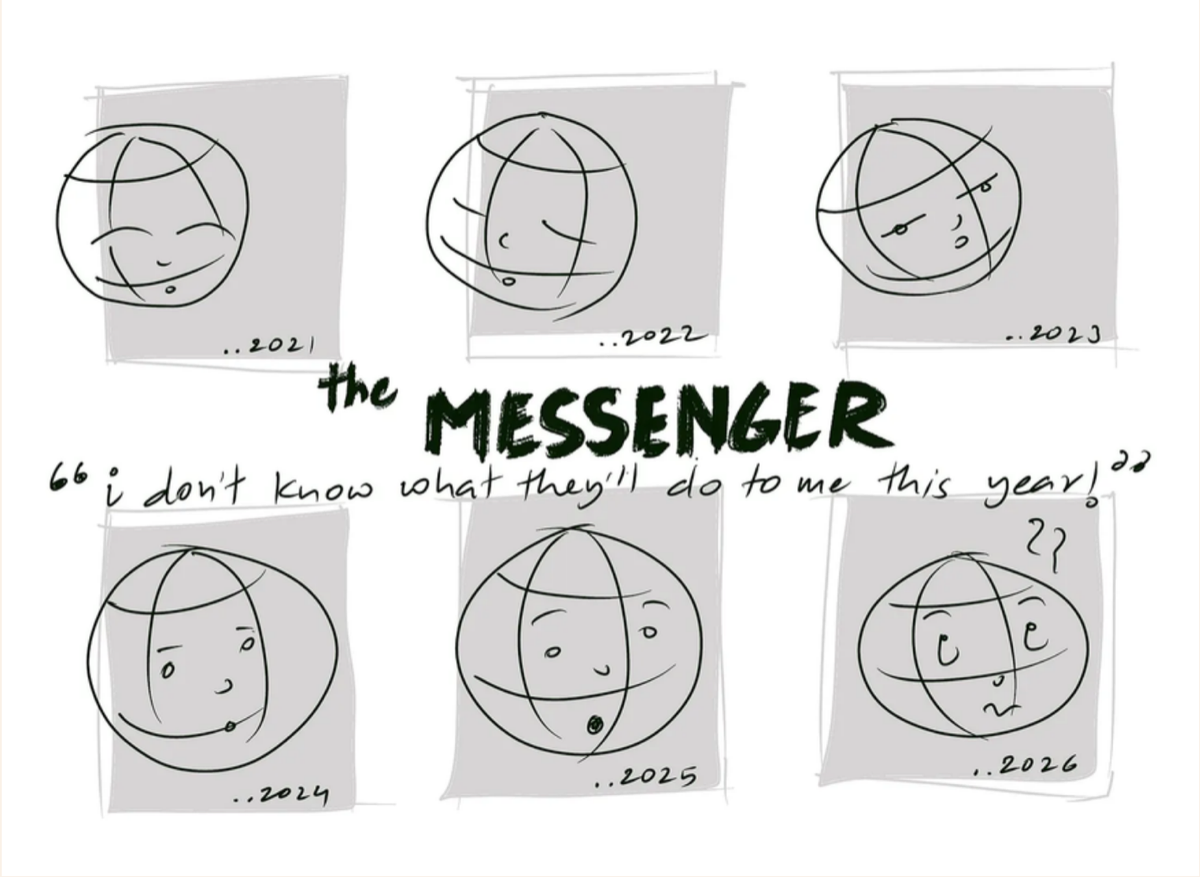

Planetarity, as conceived by Gayatri Spivak (2015), can be a method to challenge such universalising or generalising narratives. It also demands a radical reorientation of our thinking.
It calls for what Donna Haraway terms “staying with the trouble” — refusing simplistic narratives of either technological salvation or apocalyptic doom, and instead embracing the complex, messy entanglements of planetary existence.
This is not merely an academic exercise but an existential necessity.
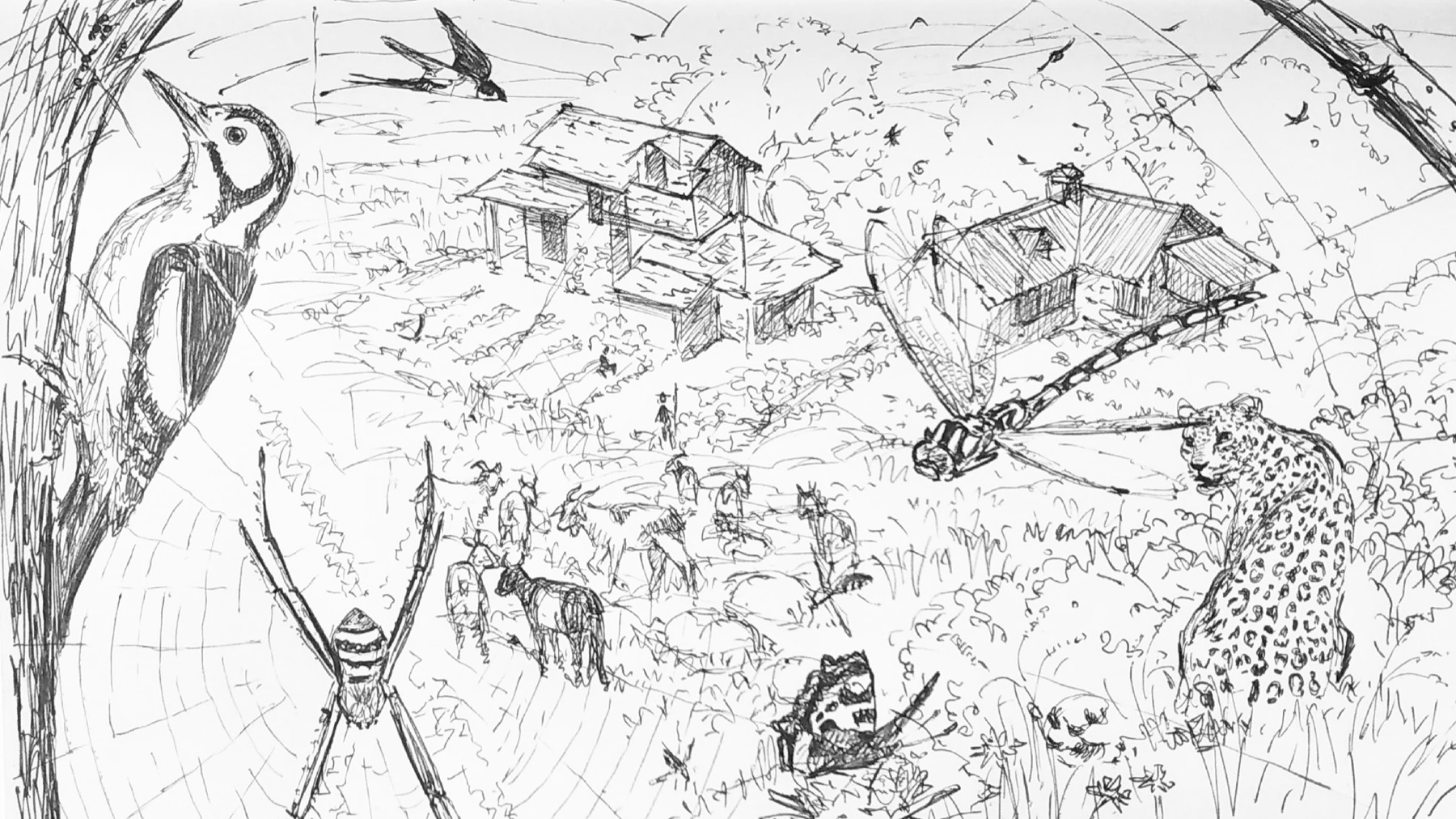
South Asia in general, and India in particular, has had a long, ongoing culture of coexisting with nature and all its complexities long before formal structures stepped in.
Forests are home, rivers and the sea are mothers, rituals and limits exist for entry into forests and collection of produce, the soil is prayed to before homes are constructed and so much more.
But, like several other practices, the actions of our colonised and capitalist past and present have led to removal of people from their natural homes, rituals criminalised, and extractive practices that benefit governments and industrial conglomerates have taken precedence and importance above all else.
This, along with a growing climate crisis and public apathy, has led to multifaceted coexistence challenges across rural and urban India with no straightforward or simple solutions in sight.
At Socratus, we have been exploring our multispecies existence from different entry points, including:
All of this with partners from each of these domains who bring their own wisdom and experience.
This has led us to create a wide range of artefacts and engagement spaces while understanding the issue from diverse perspectives.
Human–Dog Project · Human–Croc Ethnographies · Climate Recipes for Co-existence · Shaktiville Studio · Shared Spaces and Ecologies · Multispecies Canvas · Weaving Co-existence · Coexistence Mela · Planetary Citizenship Course · Multispecies Hackathon in Kochi
Urban India · with Samayu, Dogs Trust Worldwide, University of Edinburgh
As a way of putting the broader debates around human–dog conflict into perspective, we hosted an online convening to circumnavigate overlooked dimensions of the conflict that challenge the dominant framing.
Methodology: design tools to arrive at pathways for future action jointly held by clusters of people, working with smaller groups of potentially conflicting stakeholders towards informed policymaking based on their collective wisdom.
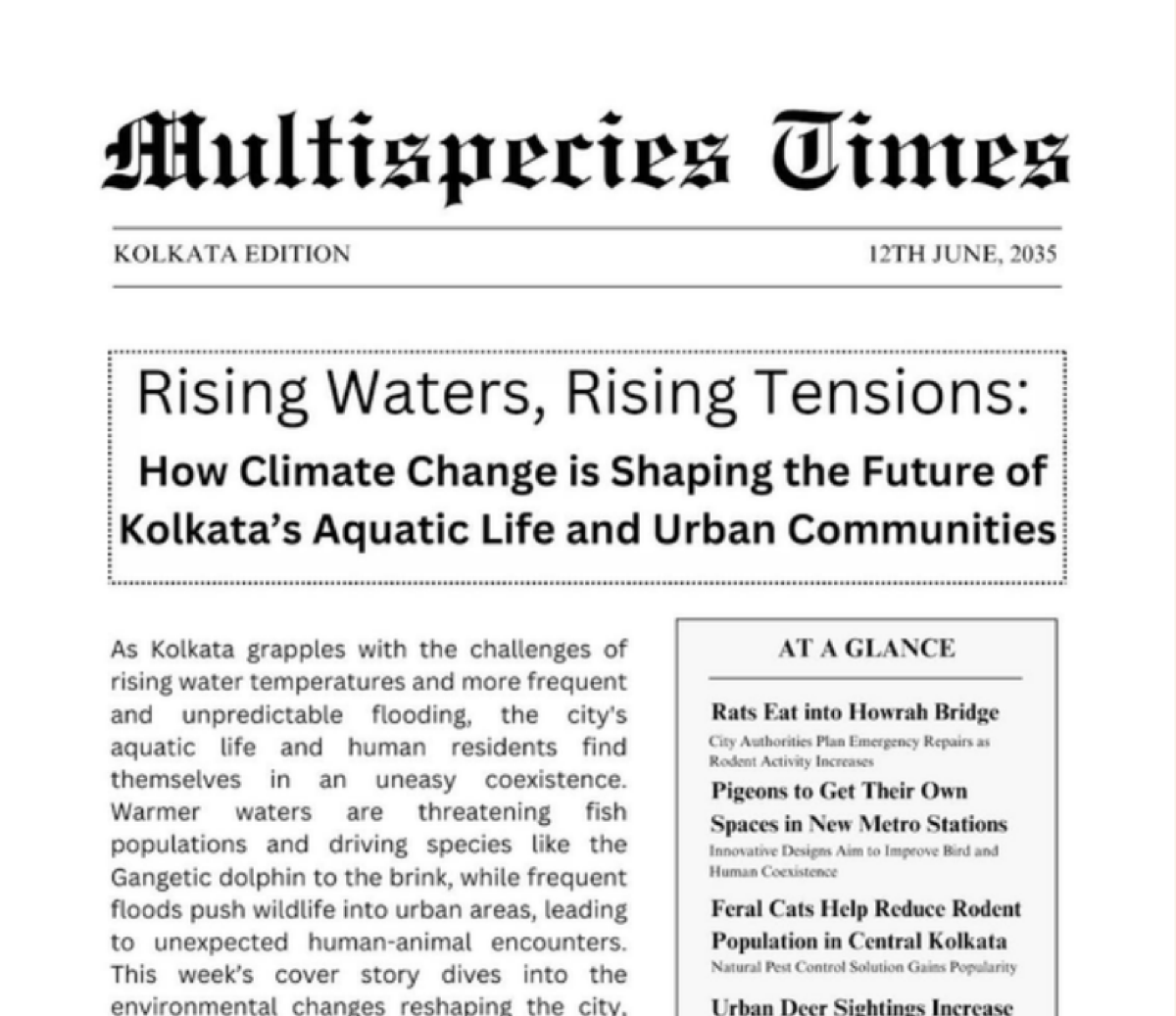
Bhitarkanika Wildlife Sanctuary, Odisha · with Nature's Club, Socratus Foundation
A richly biodiverse mangrove ecosystem covering 672 sq. km, known for a saltwater crocodile population that has rapidly recovered since the 1970s — creating a new challenge in managing its coexistence with humans.
Methodology: multispecies ethnography, showing how local perspectives and traditional ecological knowledge can enrich our understanding of interspecies conflict and forest governance more broadly.
“Boats and crocodiles behave like sisters-in-law and brothers-in-law; they will not face each other.”
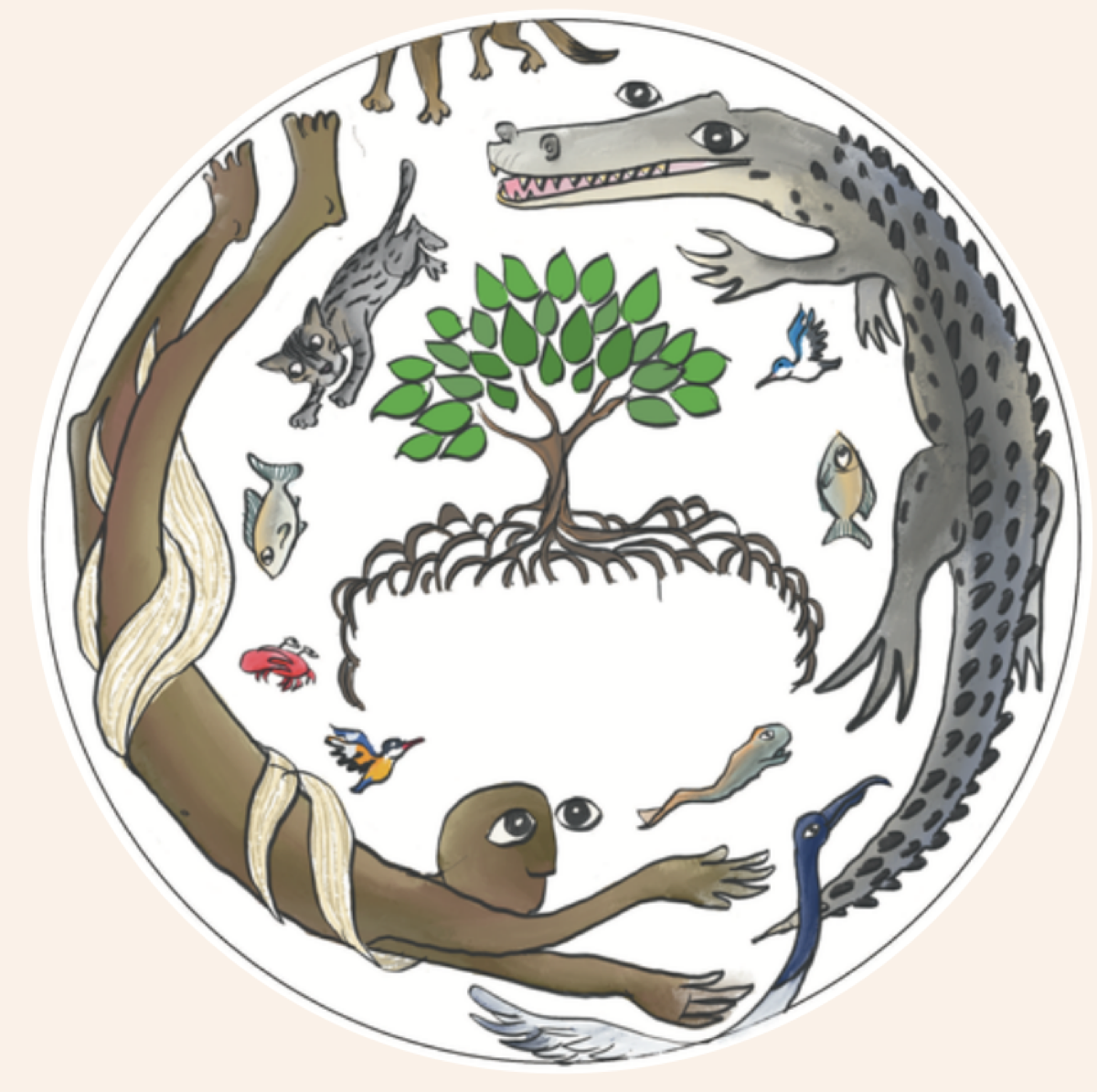
Odisha · with Srinivas Aditya and Diya Shah
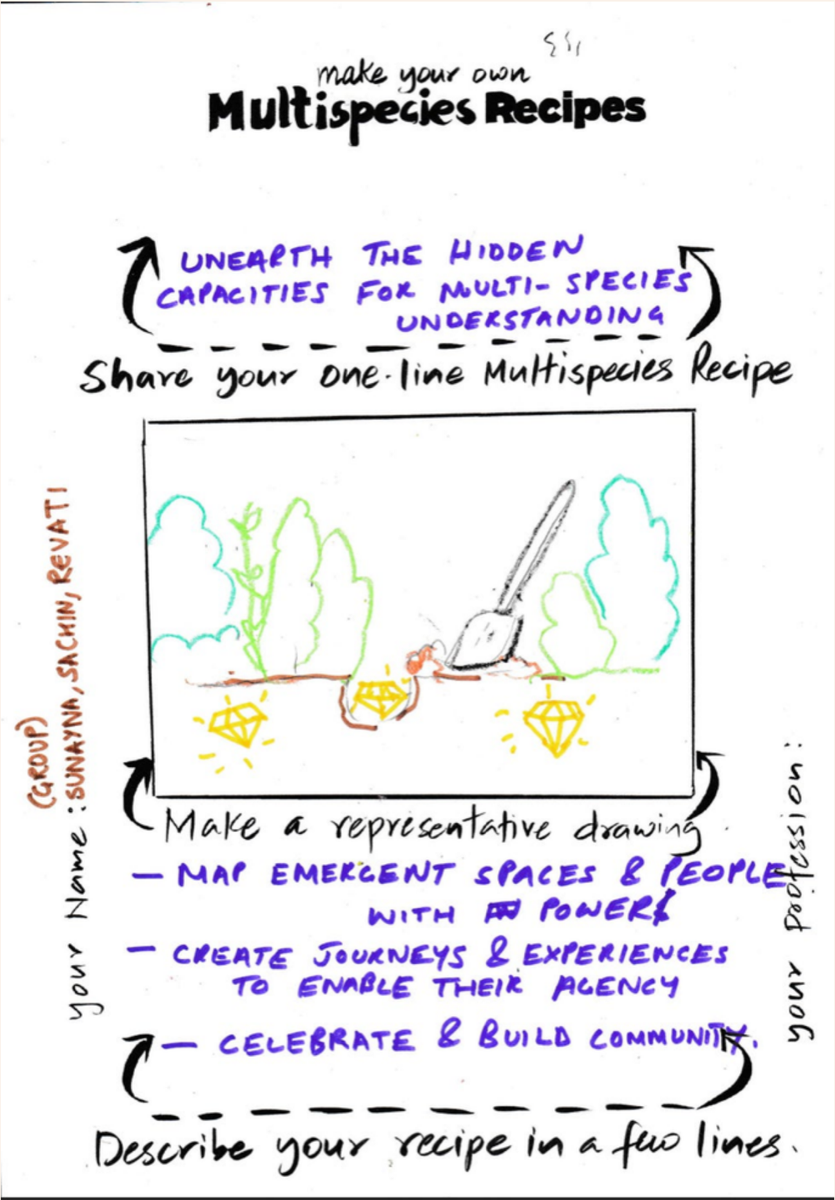
Climate Recipe focuses on illustrating ideas and wisdom to maintain self-sustaining ecosystems. Odisha has a rich history of communities living closely with the natural environment; by documenting their traditional practices and adaptive strategies, we highlight how they imagine responses to increasingly varied environmental challenges.
Methodology: a repository of experience-based knowledge built through dialogue with citizens of Odisha, using an ecosystem approach for the framework and a landscape approach for agro-climatic, socio-cultural and politico-economic realities — leading to highly localised responses to broader wicked problems.
Online
A speculative exercise to challenge the way we imagine, plan and design our cities — expanding the concept of citizenship at the neighbourhood level, to a city designed not just for humans but also for crows, crocodiles and sparrows as residents.
Methodology: a twelve-week speculative studio in which participants created their own version of Shaktiville, engaging with ecology, anthropology, philosophy and design.
Online
A case for a more multispecies space draws primarily from the truth that a more diverse ecosystem is more functionally robust. At Socratus, we are trying to reach there.
Methodology: interviewing ecologists studying leopards, barn swallows, muggers, elephants and more, to understand their daily routines, behaviour, and sharing of space with humans.
Bengaluru, Kolkata, Mumbai, Goa · with Agami, Veditum, Act for Goa
Agami and Socratus went on a multicity journey to explore the question: “Given our multispecies existence, how do we redesign our systems to ensure justice for all?”
Methodology: borrowing from ecology, ethnographic methods, speculative design, place-based thinking and law, developing our understanding of planetarity — what it really means to be a citizen of a planet, transcending our human-centred perspective.
Bengaluru · with Lagori Collective
We invited urban planners, AI engineers, technologists, ecologists, lawyers, artists and development practitioners to reflect on what multispecies coexistence means to them personally and professionally, and to imagine the structural and cultural changes that could make it a reality.
Methodology: speculative design.
Bangalore International Centre
A spin-the-wheel game to help people discover the different habitats within the city of Bengaluru — old-growth canopies, marshy tank edges, empty plots, cemeteries, restricted military pockets and ashwath kattes — and the species that live there, unnoticed.
Methodology: game design drawing on the urban forests manual, citizen science data and environmental history.
“Look for me in the last remaining patch of dense forest in the neighbourhood. This 25-acre patch of forest is like an island of green amidst the fast expanding concrete jungle that surrounds it.”
Bangalore International Centre
Co-existence Fellows were asked to submit words carrying stories, rituals and everyday practices of living with the more-than-human world. The lexicon becomes a way of understanding a world where human and more-than-human elements have evolved together over centuries.
Methodology: a multimedia installation curated and designed by Reema (Lagori) and Bhaskar (sound artist), with Socratus and the Coexistence Fellowship.
“Kadalile meeninu arayanitta peru” — “The fish in the sea is named by the fisherman.” It is the experienced fisherfolk, closely connected to the sea and its ecosystem, who name and identify the fish.
Environmental Law School, Jindal Global University
In their first semester, students selected species (vultures, frogs) and landscapes (Bhalswa Lake, Mangarbani forests) to work on, ahead of a capstone project in their second semester. Socratus provided a multispecies framework for them to think through, with workshops on natural observation, speculation, designing and prototyping.
Students used citizen juries as a tool to break the hierarchies in conventional decision-making processes.
There's a need for wider engagement across state, market and society actors on the issue of coexistence and its everyday implications — individual actors feel the need for a holistic, integrated approach but are not always sure where to go next.
Whether it's free-ranging dogs in urban India or critically endangered hoolock gibbons, each situation is unique and involves different natural (private forest patches) and artificial actors (dumped garbage), each of which must be considered in this complexity.
There's an urgent need and active role everyday citizens can play in acknowledging and improving our multispecies coexistence. Indigenous groups have been doing this for centuries; farmers across many regions of India are already learning ways to manage these situations, but there's a lot more to be done.
Technology, serious play and speculation are all tools that can be used to not only imagine alternate realities and futures, but also better document and surface existing ones.
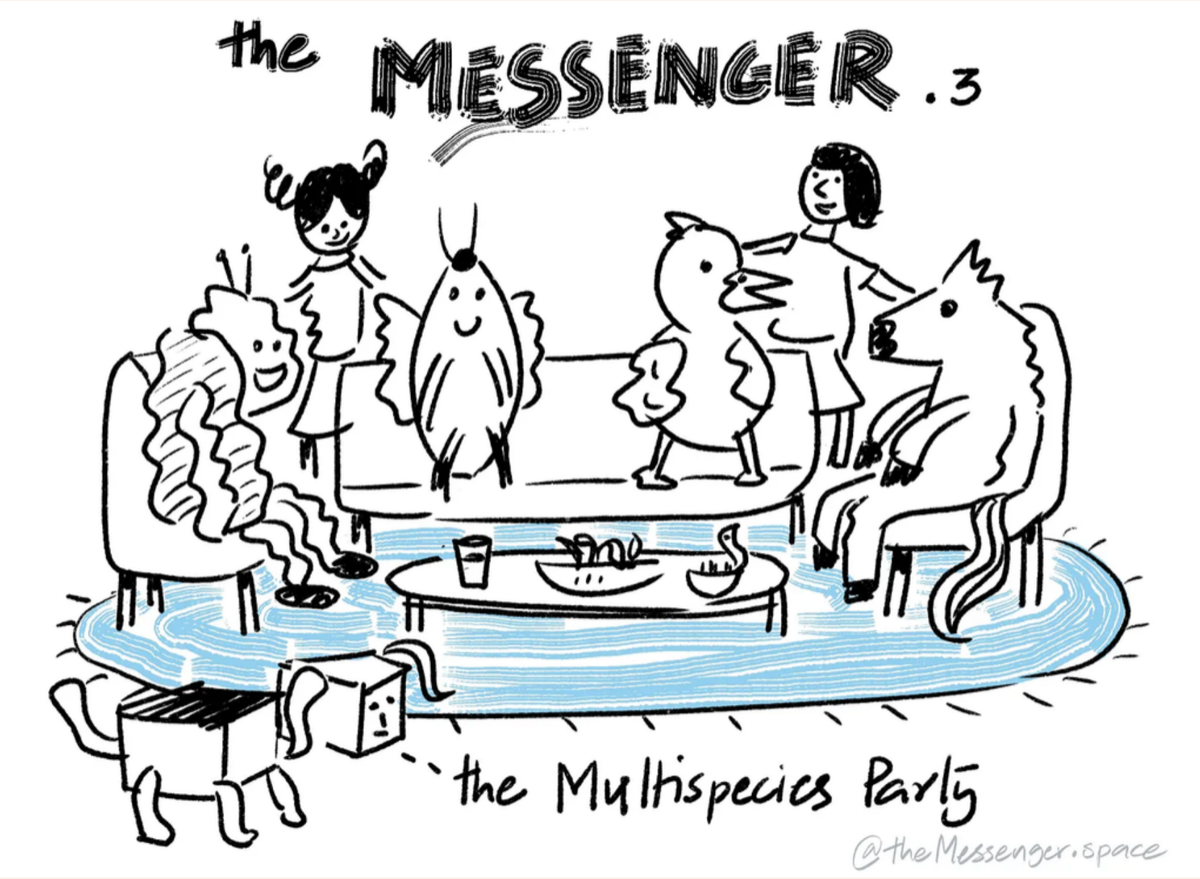
Gathering our insights from these engagements, we see ourselves taking this forward by creating persistent spaces of engagement on our multispecies and interspecies coexistence, in the form of:
Ecosystem orchestration — creating and holding a collective of individuals from diverse backgrounds (not limited to ecology, anthropology, law, art, design and education) to come together around points of intervention, possibly specific sites or projects in groups of two or more, alongside a landscape assessment of what's already happening to arrive at what can be done.
Tech for Multispecies — exploring how technology and design (Animal Centric Design) and tech-based tools (LOKA, VoiceReport) can take this work forward, working with partners who help us see our entanglement with nature more clearly.
Across ecological and social sciences
Non-profit and for-profit
Courses, studios and capstones
Anyone else interested in coexistence
Reach out if you'd like to collaborate, host a convening, or bring this practice to your city, campus or organisation.
Contact SocratusIllustration credits: Alok Shrivastava (cover) · Srinivas Mangipudi · Sartaj Ghuman · Sunayana Ganguly, Sachin Malhan, Revati Pandya · Srinidhi Gurunath
